
The inseparability of hope and uncertainty
I need to prepare a workshop for a conference, and I am uncertain what to do. I am wondering how this could be otherwise. I suppose if I were to replicate a workshop I have run before, I might be certain about what I was going to do, though this calls into question whether I would need to prepare it. I would presumably at least need to remind myself of what I did previously, but as I was doing so I suspect I would be tempted to revise it at least a little, to improve it, or make it fit its new occasion. Then, from the moment of first thinking I would revise it, at least a little, I don’t think I could be certain about how I would do so. So I think preparing a workshop for a conference, even one based on one I have run before, entails uncertainty. And the one I now need to prepare is actually something new, unlike any I have run before, so in this case, my uncertainty is correspondingly heightened.
And, of course, I have hopes for the workshop. Up until writing that sentence I had not thought specifically about what those hopes are, which I will now do, having finished writing this sentence and before beginning the next one. The first hope for it that came to mind, that it goes well, seems banal. I just checked dictionary definitions of banal, and the consensus is that it refers to something that is boring, ordinary and unoriginal. Naturally this worries me in my role as blog post writer, as of course I want to write an interesting, out of the ordinary and original post. This is another, more immediate hope of mine, and the uncertainty that accompanies it has just increased a little. I am reminded of the sorts of responses that are elicited when asking someone what their hopes are from therapy at its outset, with feeling better being not uncommon. I am also reminded of the opening lines of Anna Karenina, “All happy families are alike; each unhappy family is unhappy in its own way”. But in the therapy room, sitting opposite someone who wants to feel better, the idea that this was banal would not enter my head. Taking part in a new and unique interaction with someone, I would be focusing on what to do and say next.
The title I have given my workshop is Work in progress, and… as another of my hopes for it is that it helps me develop content that might feature in a presentation I will be delivering at the annual Australasian Solution Focused Association conference later in the year. I have borrowed this idea from the “Work in Progress” shows that comedians do to test out new material, in advance of TV shows, tours and festivals. Giving it this title removes some of the pressure inherent in the uncertainty of preparing and delivering something, as it is only work in progress after all, but it is important that uncertainty remains. In a recent review of a book about how scientists have studied physical evidence to shape understandings of both historic and possible future climates (Charenko, 2025), Lorraine Daston writes that: “uncertainty is a precondition for progress”.
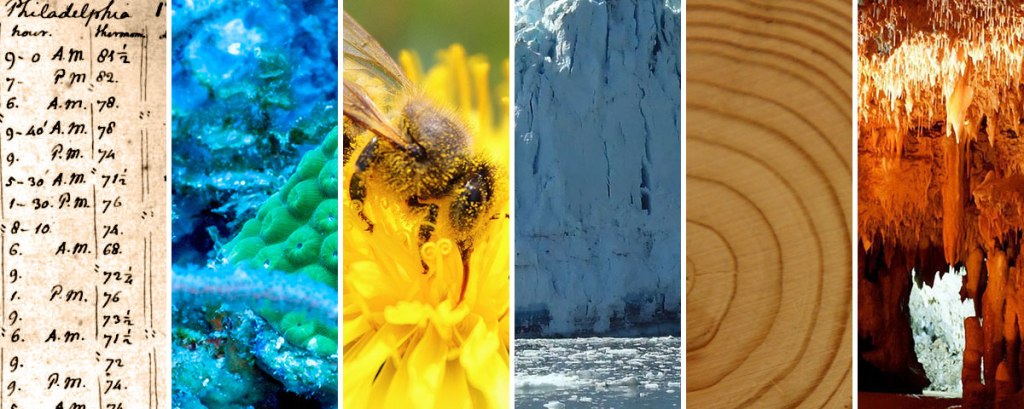
Climatology, like sociology and economics, is a “proxy science”, as the climate, like society and the economy, is the product of many factors and must be observed indirectly via proxies. The proxies for past climates include “fossilised plants and pollen preserved in peat bogs, the tree rings of giant sequoias, air bubbles trapped in ice cores, packrat middens”, and many are ambiguous and thus “plagued” by uncertainty. So, even while the science shows global warming to have been conclusively proven, climate change deniers have been able to exploit the leeway for alternative interpretations of proxy data to sow doubt and stall action. So there is a dilemma about how to talk about uncertainty in science without undermining science, about how to convey the way science advances through a process of deliberation within the scientific community, in which evidence and its interpretations are presented for peer review, and ideas and theories are adjusted and developed. The gap between evidence and interpretation can be narrowed but never fully closed, and this is the sense in which progress requires uncertainty. As Daston says, we “badly need a grown-up way of talking about scientific uncertainty, uncontaminated by a long philosophical and theological tradition in which truths worthy of the name must be certain and eternal. Just because it is progressive, scientific knowledge will always fall short of that standard.”
The neo-pragmatist philosopher, Richard Rorty, advocated replacing knowledge with hope. By “knowledge”, he was also referring to how western philosophy, from Plato onwards, sought after essential truths, and by “hope”, he was referring to the impulse to make the world better for succeeding generations. The focus on the eternal would be replaced by a focus on the future. A necessary corollary of this is that certainty is replaced by uncertainty.
The title of the conference in which I will be running my workshop is Hope in Uncertain Times. Such times are the only times that hope can exist in. I hope that I make some progress with the ideas I will be presenting. Without that hope, no progress would be possible. However, any progress that does take place will only happen through the engagement and assistance of the people who attend the workshop. Of that, I’m certain.
Reference
Melissa Charenko (2025). Climate by Proxy: A History of Scientific Reconstructions of the Past and the Future. University of Chicago Press.
 Moments of Hope
Leave a comment